
Repaving vs. Sealcoating: What Your NJ Driveway Needs
Sealcoating protects asphalt that is still sound. Repaving rebuilds a driveway whose base has failed. The surface itself shows you which one you have, and you can read most of the signs yourself.

Every spring we hear from homeowners weighing the same two quotes. One contractor says the driveway needs sealcoating. Another says it needs a full repave. Both jobs are legitimate, but they fix different problems, and paying for the wrong one wastes money in both directions. Sealcoat over a failed base buries the evidence for a season. A repave of a sound surface replaces asphalt that still had years of life in it.
The driveway itself will tell you which situation you have. You can read most of the signs standing in your own driveway, before you call anyone.
What Sealcoating Does
Sealcoat is a thin protective layer applied on top of existing asphalt. It slows the oxidation that sunlight causes, sheds water better than a weathered surface does, and brings back the dark finish. On a driveway that is structurally sound, sealcoating is reasonable maintenance, the same way paint protects siding without holding the wall up.
What sealcoat cannot do is carry weight or bridge movement. It has no structural thickness. If the gravel base under the asphalt has settled, washed out, or given up, a coating on top changes nothing about how the driveway performs. The cracks telegraph right back through along the same lines, because the movement underneath never stopped. The same goes for thin overlays: new asphalt placed over a failed base cracks where the old surface cracked.
What Repaving Does
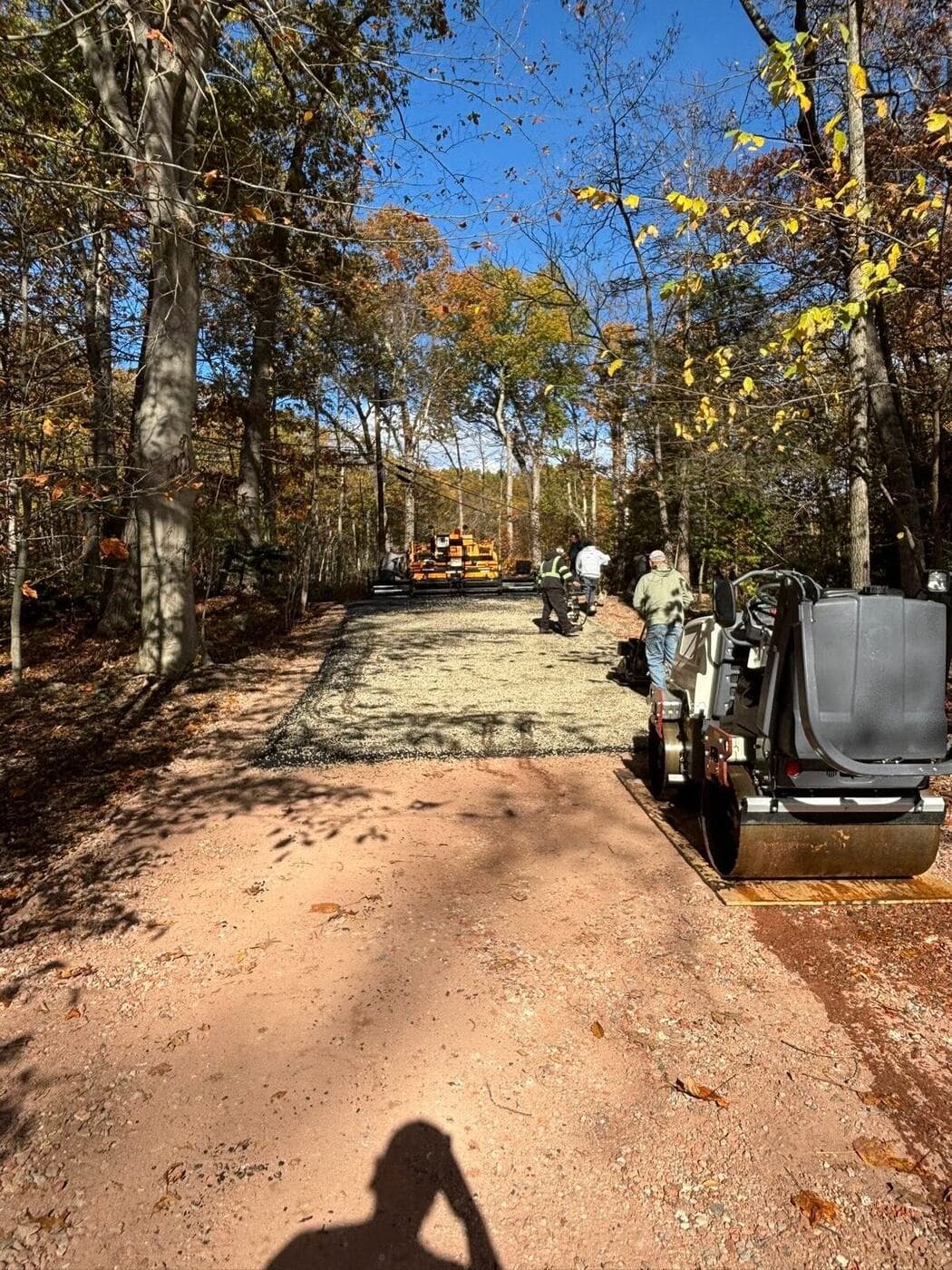
Driveway repaving is a rebuild rather than a treatment. The old asphalt gets torn out and hauled away, which exposes the base for the first time since the driveway was built. Soft spots get dug out and replaced with fresh stone, the whole base gets compacted, and the pitch gets reset so water sheds to the sides instead of pooling in the middle or running at the garage. Only then does new asphalt go down, and the fresh surface needs a few days of cure time before it takes traffic.
Tear-out is also the one chance to fix everything that lives below the surface. Slope toward the house, edges that were never supported, a spot that needs a trench drain: all of it is reachable while the base is open, and none of it is reachable once the new surface goes down.
How to Read Your Own Driveway
Walk the surface after a rain and look for these patterns. Take your time with it, and pay the most attention to the areas where cars actually sit and turn. The signs below run roughly from worst news to best.
Alligator cracking, the connected web pattern that looks like reptile skin, means the base has failed under that area. Sealcoat will hide it for a season at most. This is a repaving sign.
Low spots that hold puddles mean the base has settled. Standing water feeds the damage every winter, so these areas get worse on a schedule. Repaving sign.
Crumbling, dropping edges usually mean the asphalt was laid without support at the sides. Caught early, this can sometimes be repaired. Spread along the whole driveway, it points to a repave.
Scattered hairline cracks on a surface that still drains well and feels solid underfoot are weathering. That driveway is a fair candidate for crack filling and sealcoating.
Gray, faded color on its own is cosmetic. Fading alone is not a reason to tear out a driveway.
Have a paving or excavation project in Morris County?
Bruno Enterprises is a licensed and insured NJ contractor (NJ Home Improvement Contractor #13VH13550100) based in Morristown. We walk the site, explain what the job actually needs, and put the price in writing. Get a free estimate or call (973) 349-0932.
Why New Jersey Winters Force the Issue
The freeze and thaw cycle is what separates a driveway in Morris County from one in a gentler climate. Water works into every crack and freezes, and the ice expands and pries the crack wider. The next thaw lets more water in, and the cycle repeats all winter. A small defect that would sit quietly for years in a dry climate grows every season here. The same cycle is why puddled low spots matter so much: a puddle in July becomes an ice lens in January, sitting under the surface and lifting it a little more with every freeze.
That is why the timing of the decision matters. A borderline driveway in September is a worse driveway by April. If the surface is still sound, filling the small cracks and sealing before winter keeps the water out of them. If the base is already failing, the honest move is to plan the repave instead of paying to cover the symptoms one more time.

What We Tell Homeowners on a Walk-Through
We pave for a living, so you might expect us to push repaving. Reviewers on our Google profile mention the opposite: we have recommended the cheaper option when that was what the job called for. Recommending work a driveway does not need is a fast way to lose the referrals this business runs on.
On a walk-through we read the same signs listed above, and we check the base where it shows at the edges of the driveway. If crack filling or sealcoating is the right answer, we say so. If the base is gone, we explain what the rebuild involves, from tear-out to compaction to the new surface, and put the price in writing. Our recent asphalt paving work includes a 90-ton driveway in Harding and a tear-out and repave of more than 7,000 square feet in Mahwah, and both of those jobs started with the same walk of the property.
If you are looking at a rough surface and two quotes that disagree, send us the address. Estimates are free, and you will get a straight answer about which job your driveway needs.